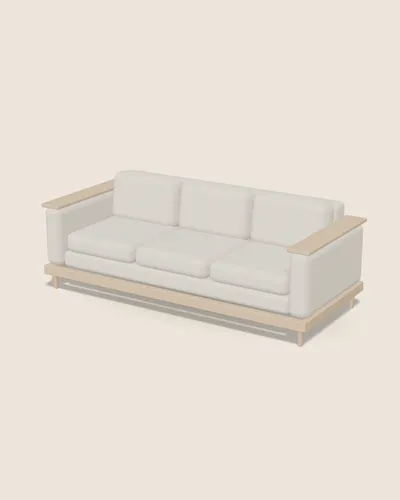
Oakhaven · Design system v1.0
Calm, crafted, and built to last.
Every colour, size, shadow, easing curve and 3D material on the storefront comes from this page. Change a token in @theme and everything here, including the 3D stage, follows.
Warm, not cold.
Oiled timber, linen and plaster tones. Shadows are tinted brown, never grey.
Calm, not static.
Slow, eased reveals and a camera that never rushes. Nothing loops for attention.
Crafted, not decorated.
3D only where it explains the product: its angles, its materials, how it's made.
02
Color
Contrast ratios below are computed live in the browser from the current token values. Oak and Sage fail AA as text, so they are fills only; use their -700 shades for text.
03
Typography
Fraunces for display, Inter for everything you read or tap. The scale is fluid between 360 and 1440 px. Viewport: — px
04
Spacing, radius and elevation
Spacing (base --spacing × n)
Radius
Elevation
Cards sit on a tilted plane (perspective: var(--perspective-near) + rotateX) so each level reads as real height above the surface.
05
Components
Every state, live. Tab through them to see focus.
Buttons
Inputs
Enter a valid email address.
We deliver to this postcode.
Focus state: tab into any field. Inputs use 16 px text so iOS doesn't zoom.
Swatches
Sold out is shown with a strike-through and reduced opacity, not colour alone, and announced in the label.
Badges, price and product card
$2,350
$1,480was $1,720
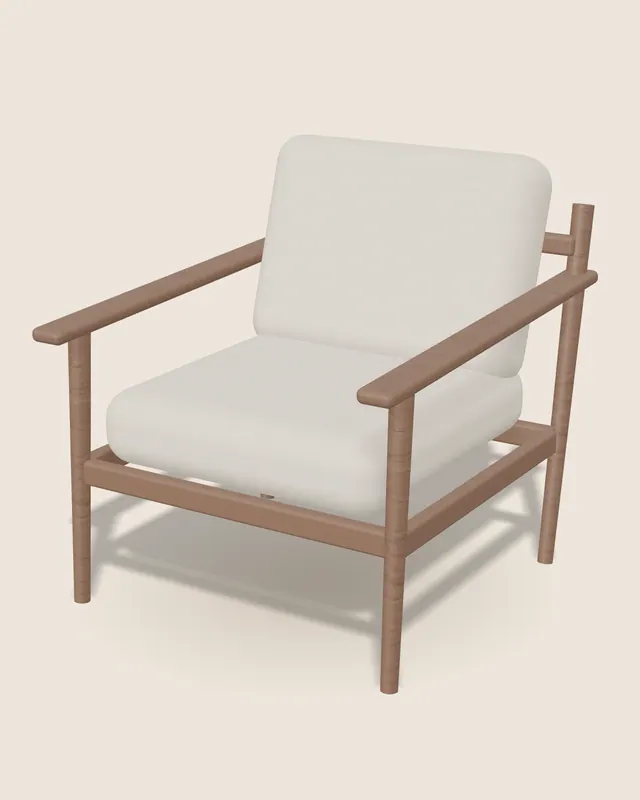
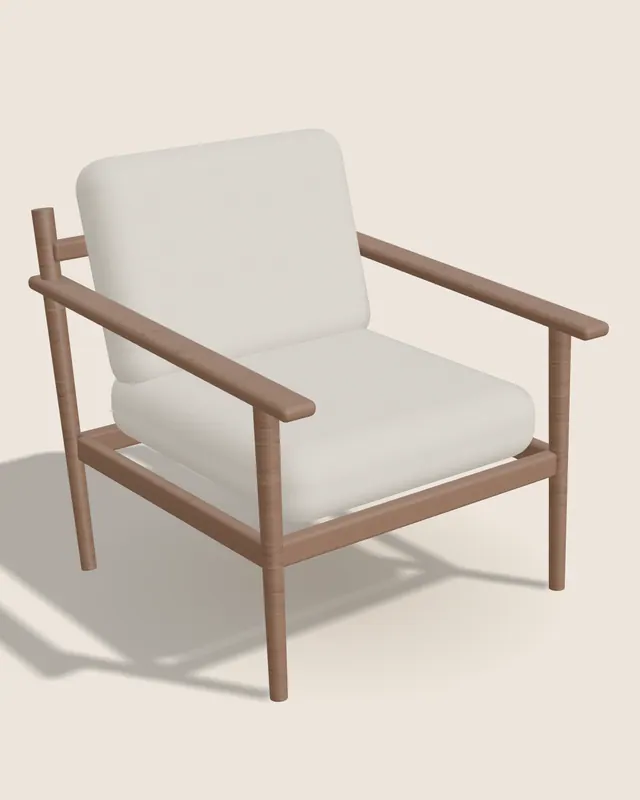
Hale Lounge Chair
Walnut · linen or bouclé
$1,480was $1,720
Accordion, tabs, toast and drawer
Dimensions
Materials and care
Delivery
Tilt card
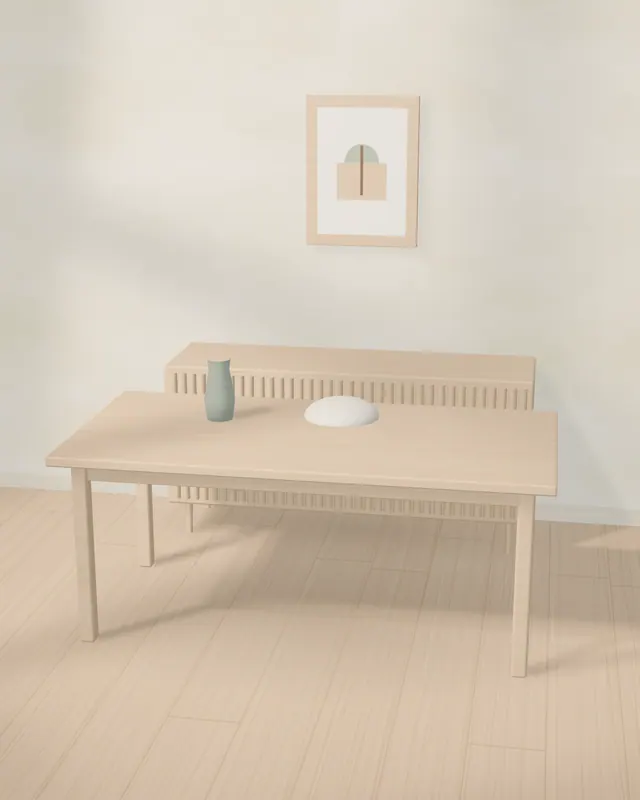
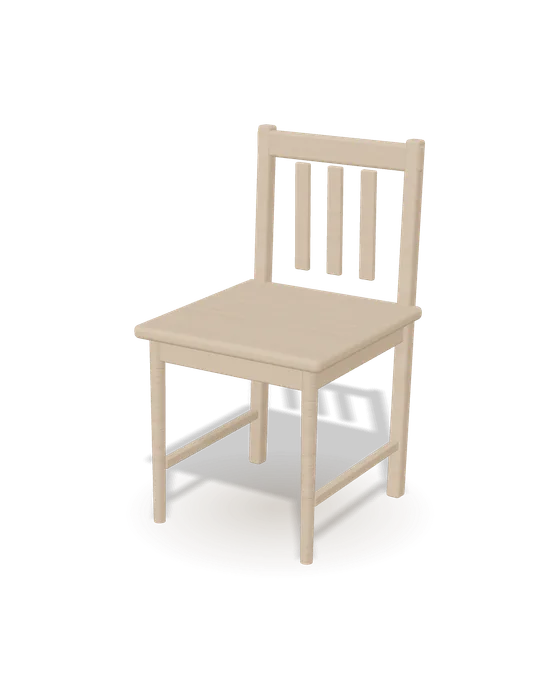
- Pointer tilt, max 6°, eased back on leave.
- Three depth layers: room photo, cut-out product at
translateZ(40px), label chip in front. - A soft highlight follows the pointer (
mix-blend-mode: soft-light). - Touch and reduced motion: flat card with a scale-on-press.
06 · Showpiece
3D presets
One procedural object (the Bram stool, built from rounded boxes) under the same material and lighting presets the storefront scenes use. The stage starts as a poster; 3D loads only when you ask for it.
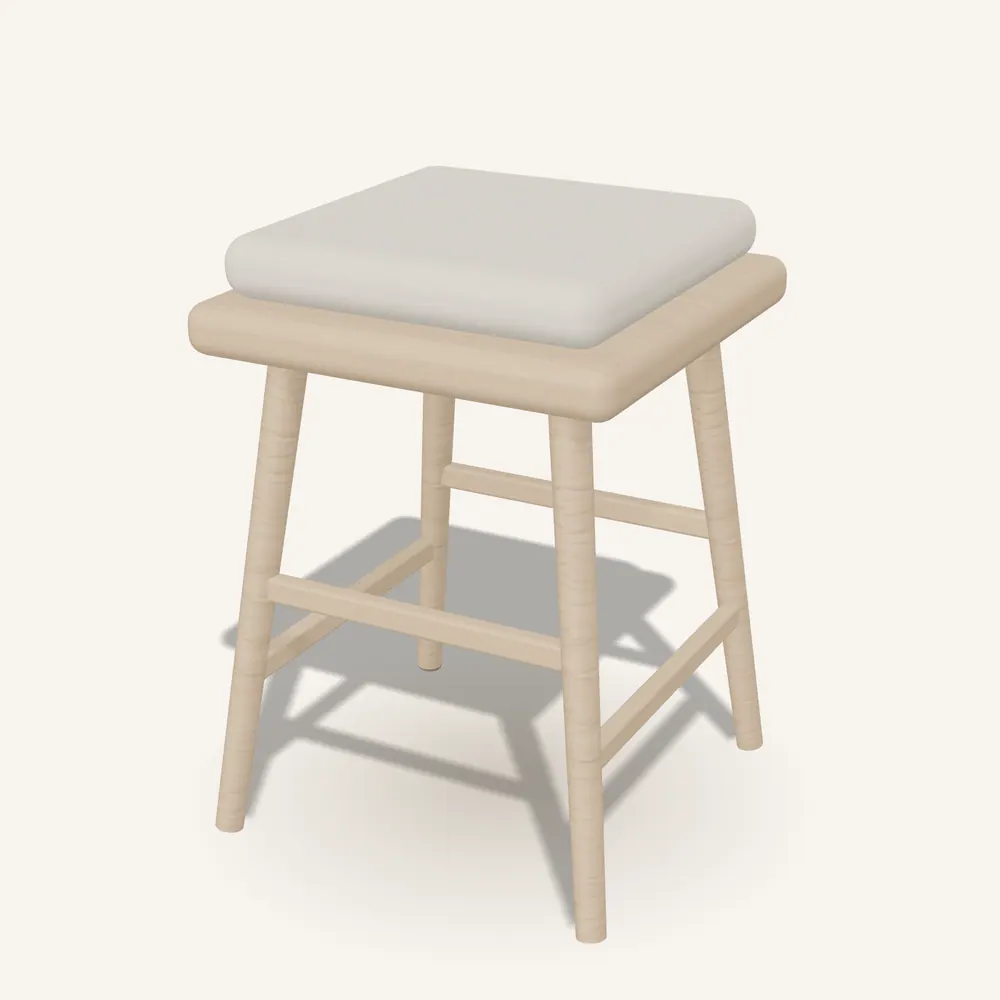
Material presets (PBR)
Grain, weave and bouclé loops are generated on a canvas at runtime and used as colour and bump maps, so no texture files are downloaded.
Camera and depth tokens
Budgets and the poster-first rule
- Every canvas starts as a same-size poster image (the LCP element on the home page).
- Three.js is a separate chunk, imported only after LCP when the stage is near the viewport.
- One WebGL context per page: scenes share a renderer and pass the canvas between them.
- Pixel ratio capped at 1.5 (1.25 on phones). Loops pause off-screen and in hidden tabs.
- Ambient 3D (hero, scroll scenes) is off under reduced motion; 3D you control, like this stage, stays available.
- Exported models: under 1.1 MB and 7.3k triangles each (see
ASSETS.md).
07
Motion
Slow, eased reveals (0.6–1.2 s) and snappy micro-interactions (150–250 ms). Every animation is registered inside gsap.matchMedia(), so it has a reduced-motion version.
Easing
Durations
Reveal patterns
08
Accessibility checklist
- Focus is always visible. 2 px ink outline, 3 px offset; light outline on dark surfaces.
- Targets are at least 44 × 44 px. Icon buttons, swatches, steppers and hotspots included.
- Text meets WCAG AA. Ratios are computed on this page; oak and sage are fills only.
- Canvases are
aria-hidden. Each has a visible text equivalent and a descriptive posteralt. - 3D hotspots are real buttons. HTML positioned over the canvas, in left-to-right DOM order.
- The 3D viewer works from the keyboard. Arrow keys rotate; visible rotate and reset buttons.
- Reduced motion is respected. No smooth scroll, no pinning, no auto-rotate; posters replace ambient 3D.
- Dialogs and drawers trap focus. Esc closes them and focus returns to the trigger.
- Errors are linked to fields with
aria-describedby; success is announced witharia-live. - The header reappears on focus. A hidden sticky header slides back when keyboard focus enters it.